
Spean Luy
Repairing Critical Friction in a Microfinance Loan Lifecycle
Role
Lead Product Designer
Scope
End-to-end UX research and UX Design
Timeline
2021
Team
Senior Designer
Context
Spean Luy is a digital micro-loan platform in Cambodia offering fast, paperless loans.
The value proposition was simple:
Fast approval
No paperwork
Mobile-first
However, users were dropping off during verification, KYC, and Wing cash-out connection.
Operationally, unreadable ID images and failed account matching were increasing support burden and slowing loan processing.
The Problem
Data revealed systemic friction:
2702 inactive users who did not complete verification
516 unreadable ID images out of 1735 applications
High confusion during Wing account connection
Lack of contextual feedback during critical actions
The issue was not feature gaps.
It was clarity, validation, and trust signaling across the loan lifecycle.
Strategy
Rather than redesign the entire product, I prioritized high-impact friction points.
The approach:
Improve system feedback loops
Guide validation instead of reacting to errors
Reduce ambiguity in critical financial steps
Clarify the loan lifecycle mentally and visually
Intervention 1, Verification Funnel Repair
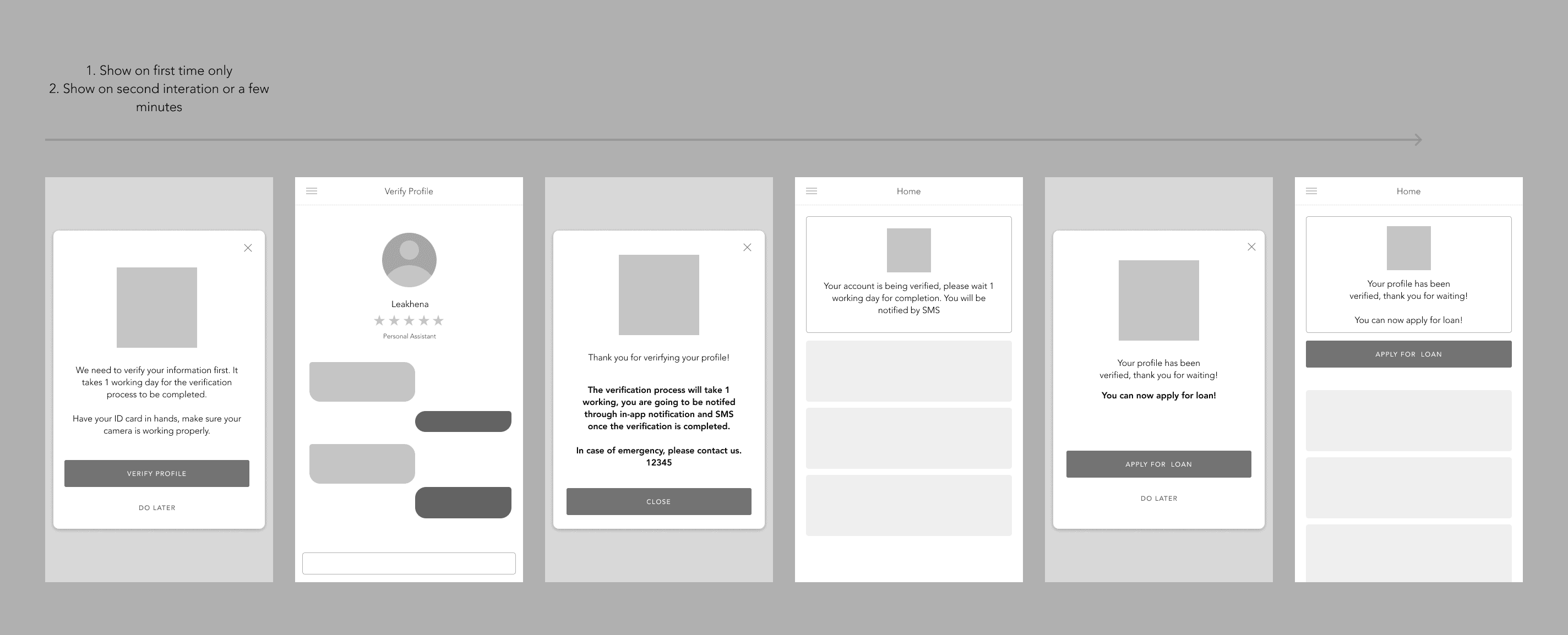
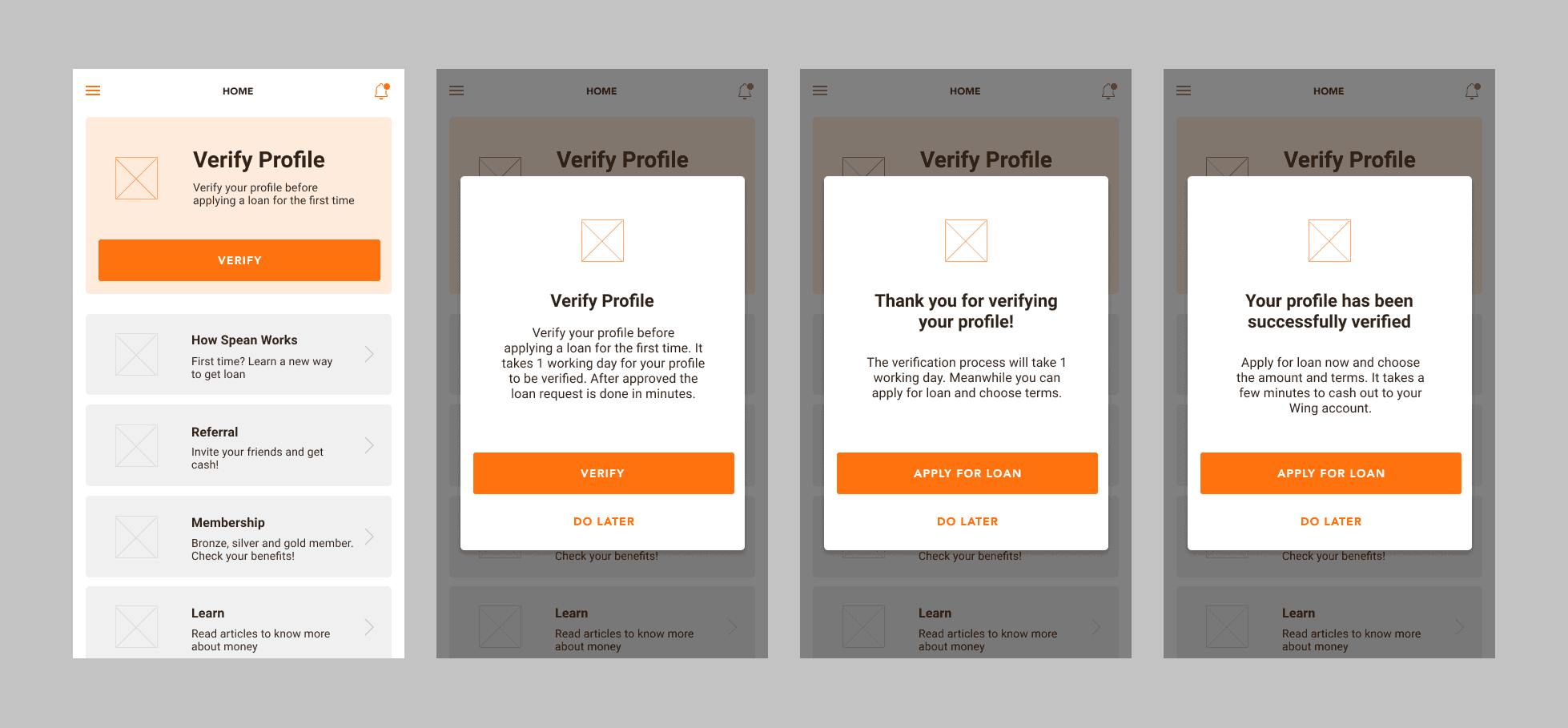
Lack of Action Feedback
Users did not know:
When verification started
Whether actions succeeded
What would happen next
Introduced:
Contextual modal prompting first-time verification
Clear explanation of processing time
Reinforced success states
Guided next steps
Impact:
+61% increase in account verification rate
Small UI adjustments significantly improved behavioral follow-through.
Intervention 2, Wing Account Validation Redesign
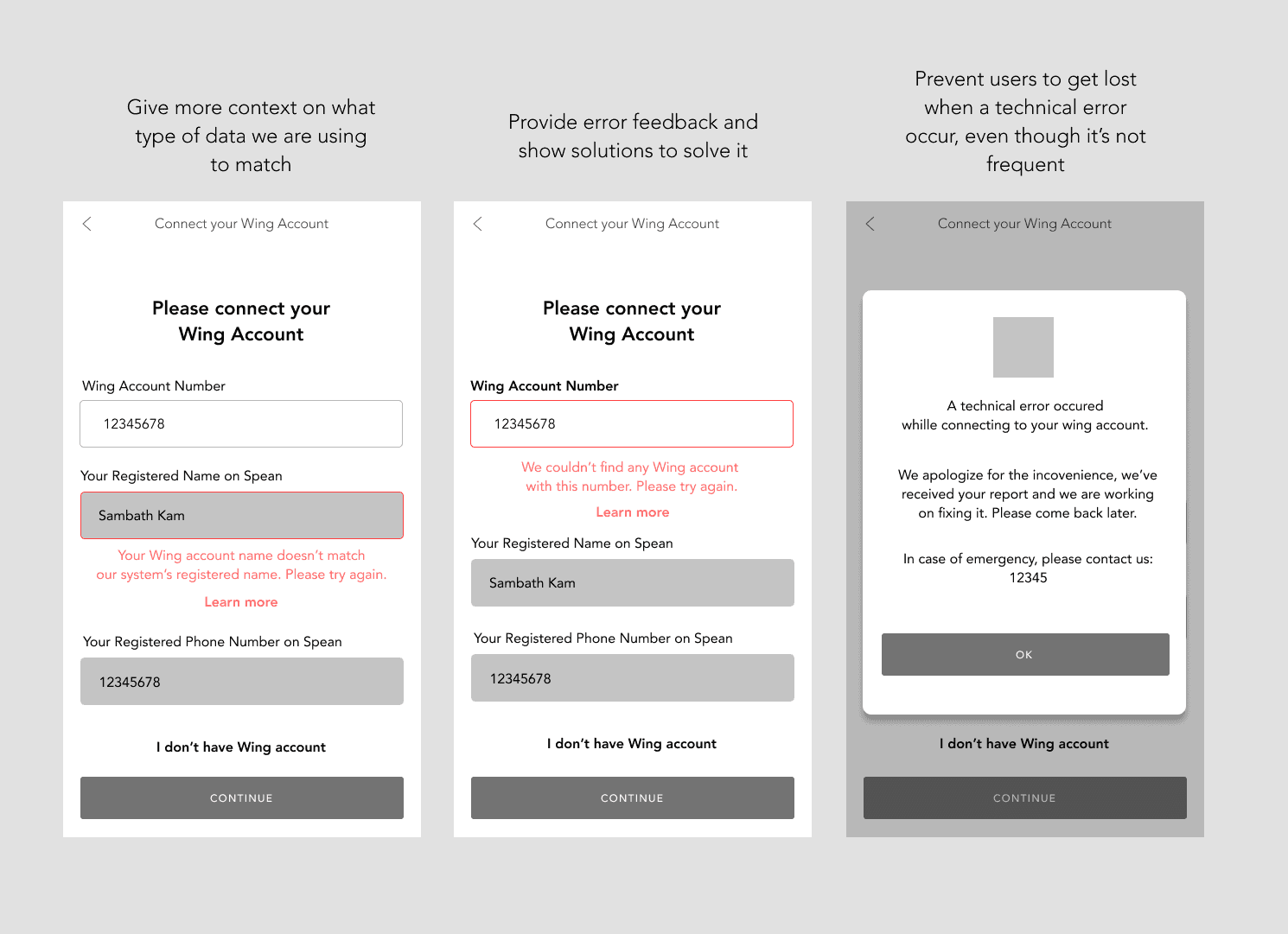
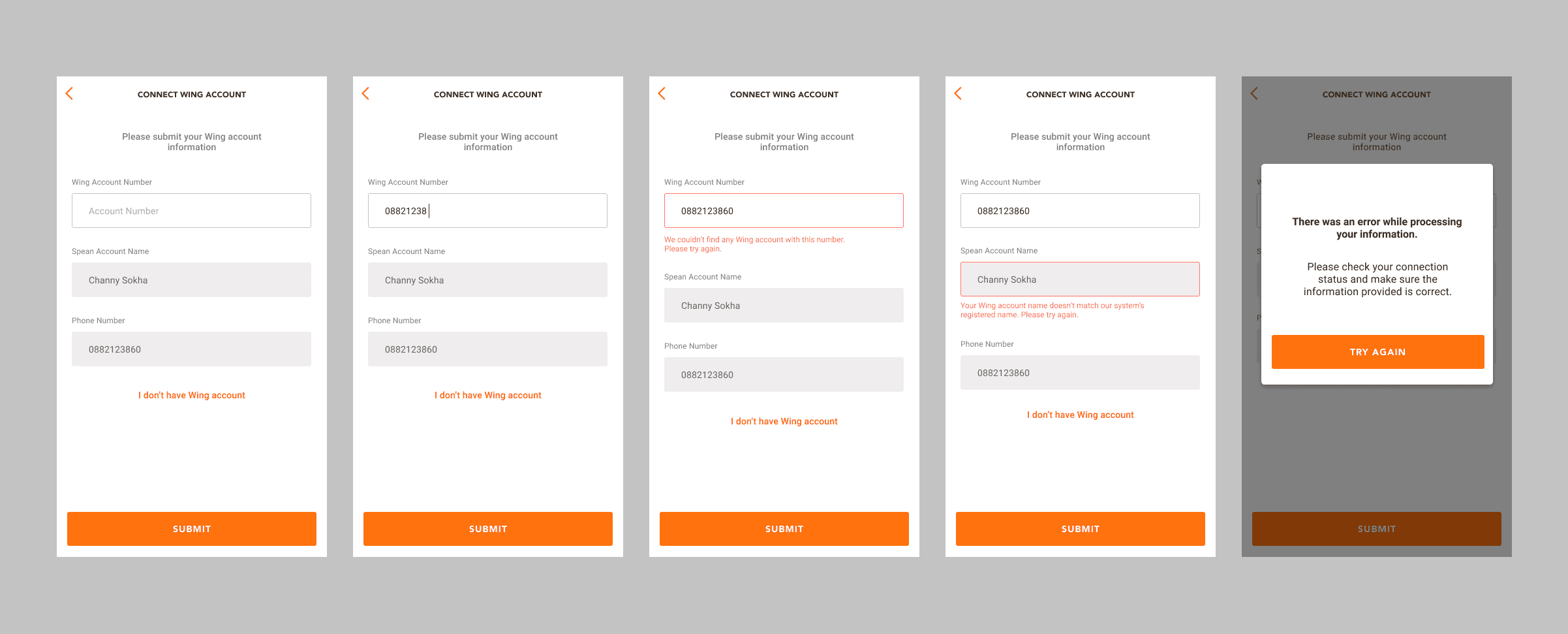
Reactive Validation
Errors were shown after submission without guidance on how to fix them.
Redesigned connection flow:
Displayed user’s registered name for matching clarity
Inline validation highlighting specific mismatches
Clear error explanation
Technical fallback screen with recovery path
Toast confirmation after successful connection
This shifted the experience from blind retrying to informed correction.
Intervention 3, KYC Optimization
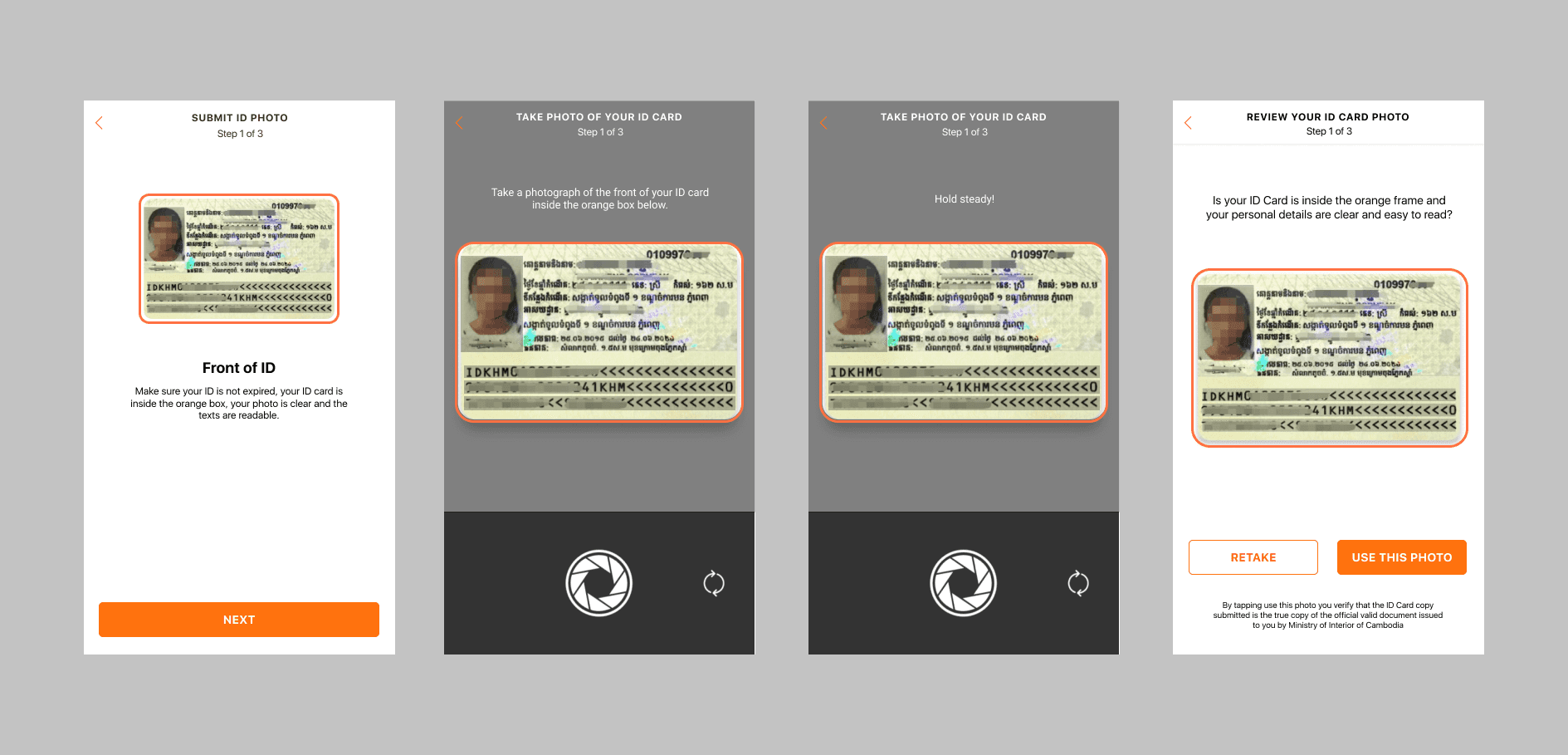
User tested to understand unreadable ID failures and redesigned capture flow:
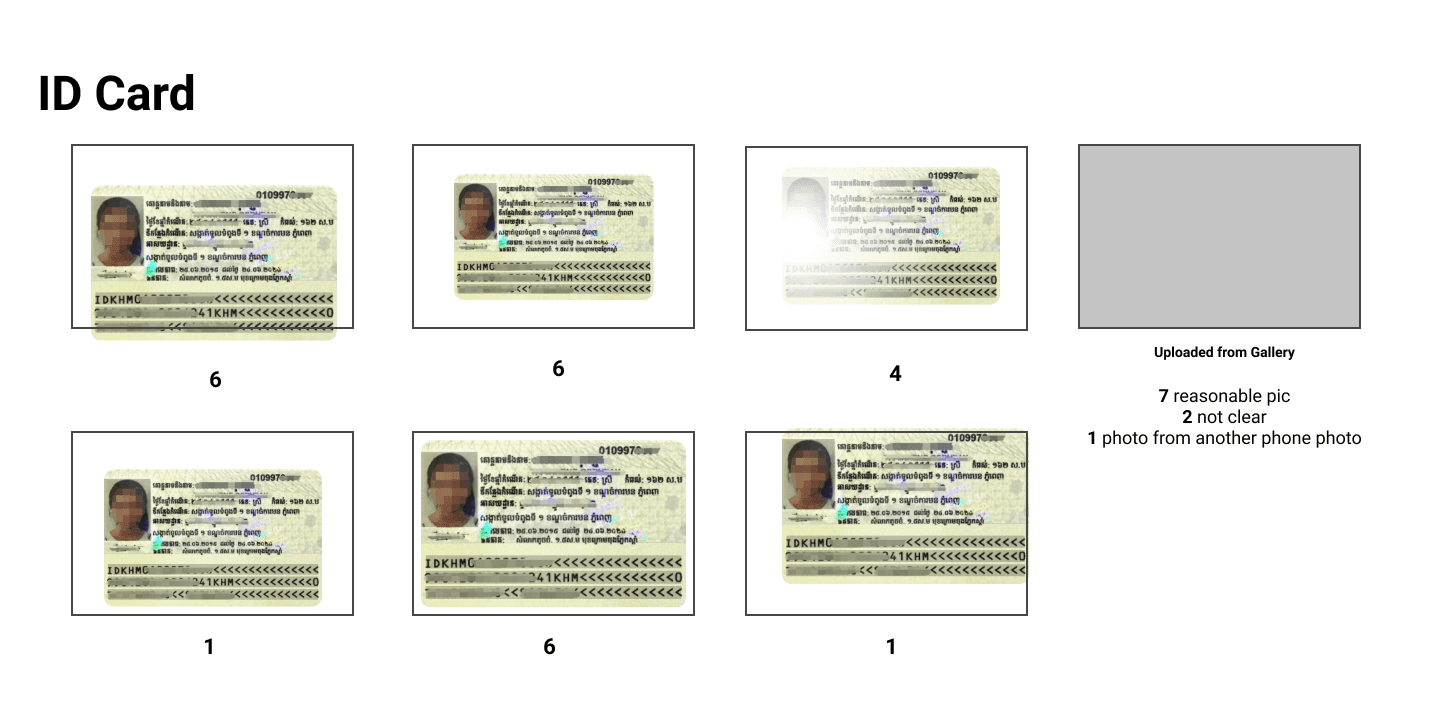
High-Friction KYC Capture
The 9-step ID capture flow:
Offered little framing guidance
Provided no positioning feedback
Did not support low-end device camera limitations
This created both user frustration and operational inefficiency.
I analyzed unreadable ID failures and redesigned capture flow:
Framing box guidance
Clear positioning instructions
Image review screen with actionable feedback
Structured error messaging
Proposed computer vision for auto-detection of ID position and readability
Focus guidance for low-end devices
Impact:
92% reduction in incorrect ID image submissions
This reduced operational load and accelerated application processing.
Intervention 4, Lifecycle Architecture
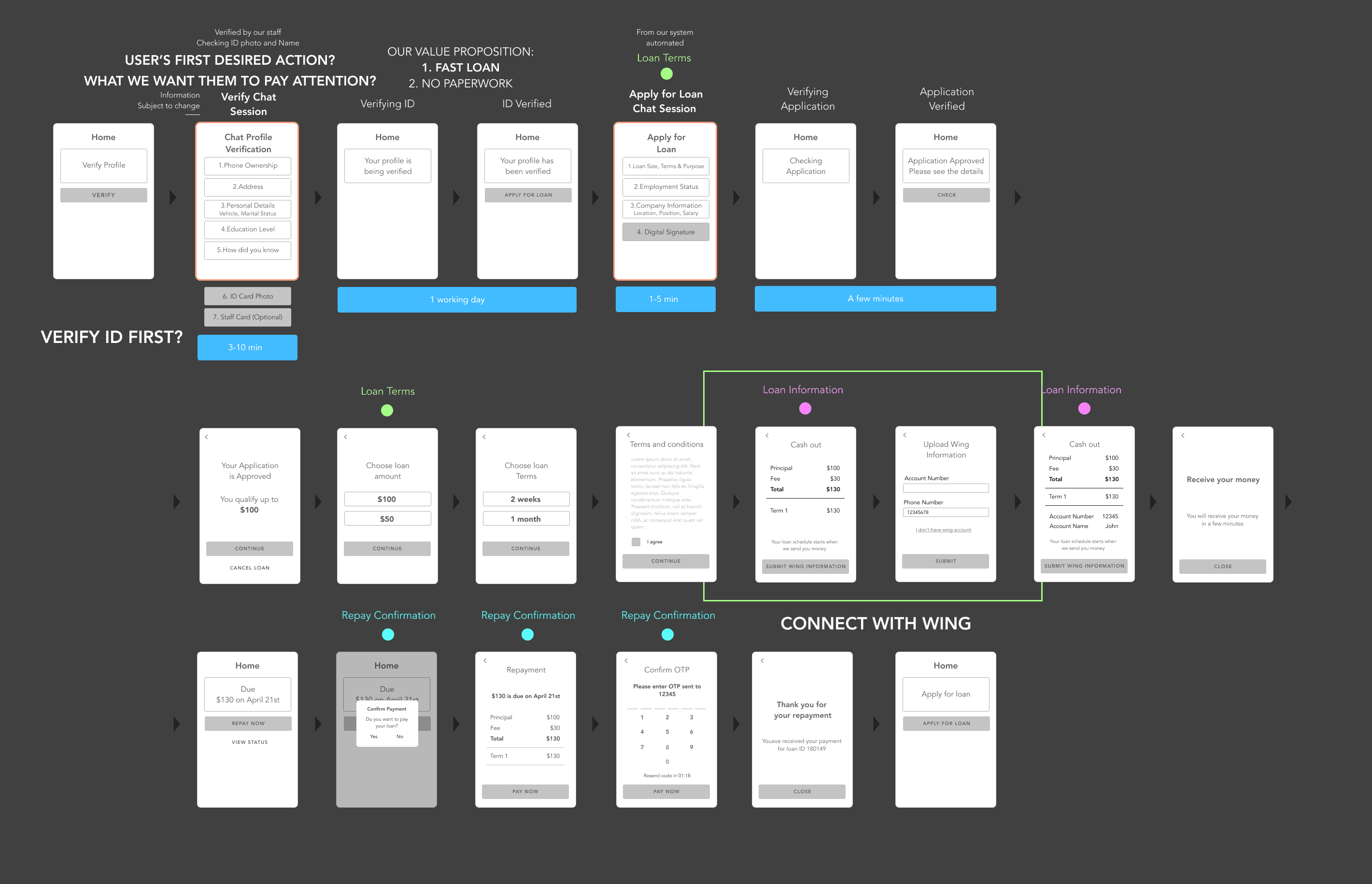
Mapped and clarified:
Verification
Application
Approval
Wing connection
Cash-out
Repayment
The goal was to shift from fragmented screens to a coherent financial journey.
This improved user comprehension and reduced ambiguity around loan states.
Reflection
This project reinforced:
In financial products, clarity is more important than aesthetics.
Small feedback loops can produce large behavioral changes.
Validation design directly impacts operational cost.
Trust signaling is critical in emerging markets with low digital literacy.
Given more time, I would:
Implement automated KYC validation fully
Instrument deeper funnel tracking
Optimize repayment behavioral nudges
UX Research & Customer feedback
To ground the work in real user behavior, I also conducted in-field interviews with small business owners, observing how they currently access loans and where they struggle. These conversations revealed key friction points around trust, unclear processes, and difficulty completing verification steps. The insights directly informed design decisions, particularly around validation, feedback, and simplifying critical flows.